When concrete floors must stand up to forklifts, chemical exposure, and relentless footfall, surface preparation is everything. Shot blasting delivers a fast, clean, and controlled way to transform tired slabs into a perfectly keyed base ready for long-lasting resin systems. By propelling steel abrasive across the slab in a closed-circuit process, contaminants are removed and a uniform texture is created, maximising adhesion for primers, epoxy coatings, and polyurethane screeds. The result is a tougher floor, fewer callbacks, and a lower whole-life cost—especially in industrial and commercial environments where downtime is expensive.
What Is Shot Blasting and Why It Outperforms Other Floor Preparation Methods
Shot blasting is a mechanical process that drives small steel media at the concrete surface and immediately vacuums the debris in a sealed system. This “impact and reclaim” approach lifts laitance, weak cement paste, old coatings, light oil staining, and surface imperfections while creating a consistent mechanical key. With the substrate clean, dry, and micro-textured, primers and coatings can wet out and anchor into the profile, dramatically reducing the risk of peeling, pinholing, or poor coverage. It’s a repeatable, measurable method that supports better outcomes for concrete floor preparation across warehouses, factories, and logistics hubs.
Compared with acid etching, shot blasting is cleaner and more sustainable. There are no aggressive chemicals to manage, fewer environmental concerns, and no unpredictable reactions with contaminants hidden in the slab. Unlike excessive scabbling, which can bruise or microfracture concrete, captive shot blasting refines the surface without causing unnecessary damage. And while diamond grinding has its place for edge detail and patch repairs, blasting is exceptionally efficient at creating the right surface profile across expansive areas, particularly when a specific Concrete Surface Profile (CSP) range is required for resin systems.
Dust control is crucial in active facilities. Because shot blasting is a sealed, vacuum-assisted process, most dust is captured at the source, supporting a cleaner working environment and reducing cleanup. That makes it ideal for sensitive sectors like food and beverage, pharmaceuticals, and electronics, where air quality, hygiene, and contamination control are critical. For facility managers evaluating options, Shot blasting services deliver the cleanest, fastest route to a reliable mechanical key that supports durable finishes.
Adhesion metrics tell the story. Properly blasted concrete presents open pores and angular surface peaks that mechanical coatings can grip. Whether the specification calls for a CSP of 2–3 for high-build epoxies or CSP 4–5 for heavy-duty screeds, adjusting machine speed, shot size, and pass pattern makes it possible to dial in the exact profile. The result is stronger bond strength, uniform film thickness, and a finish designed to perform under industrial loads.
Applications, Sectors, and Real-World Outcomes Across the UK
Across the UK, industrial flooring projects demand repeatable results and tight timelines. Shot blasting thrives in this reality. In logistics facilities, it quickly removes curing membranes and laitance from new slabs, ensuring primers penetrate and bond. In manufacturing plants, it breaks down worn coatings and minimal contamination so resin repairs and recoats last. In cold stores and food-grade spaces, the dust-controlled process helps protect hygiene while establishing the robust texture needed for anti-slip, chemically resistant resin systems. Even car parks and service yards benefit from improved traction and coating life when surfaces are blasted before application.
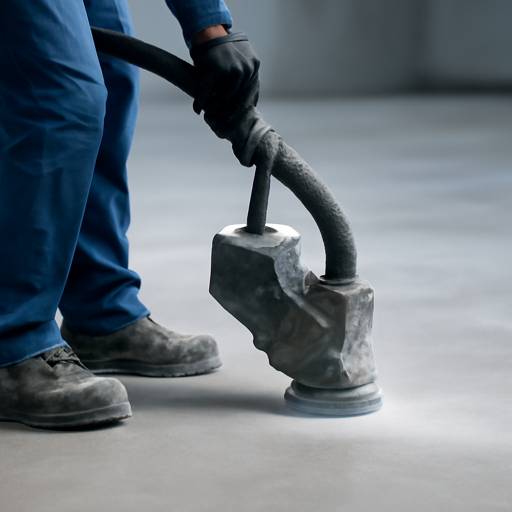
Consider a large logistics hub in the Midlands requiring minimal downtime. A coordinated programme might begin with a site survey, moisture checks, and contamination testing. Once production windows are agreed, high-output captive blasters process 5,000 m² over back-to-back night shifts. Edgework and tight zones are completed with hand-held equipment, achieving a consistent CSP 3–4 across the floor. A solvent-free epoxy primer follows, then a high-build coating or heavy-duty polyurethane screed in high-wear lanes. By Monday, the area is back in service, benefiting from improved slip resistance, cleanability, and impact tolerance under forklift traffic.
Refurbishment projects also see major gains. Old resin that has debonded or worn through can be blasted off efficiently, exposing sound concrete and any cracks or joints that need repair. After joint arrises are reinstated and structural issues addressed, blasting resumes to unify the profile before fresh resin or screed is installed. This approach reduces patchwork results, prevents “picture framing” around old repairs, and helps ensure the entire system cures to a uniform finish and sheen.
National coverage is valuable where portfolios span multiple sites—from London and the South East to the North West, the Midlands, Wales, Scotland, and beyond. Coordinated scheduling, consistent QA standards, and specification-driven preparation mean results look and perform the same regardless of location. For sectors like automotive, aviation, pharmaceuticals, and food and drink, this uniformity supports audits, safety compliance, and predictable maintenance cycles across the estate.
From Surface Profile to Final Finish: How Shot Blasting Sets Up Epoxy, Screeds, and Long-Term Performance
A successful floor isn’t just installed—it’s engineered from the substrate up. The process begins with an assessment of slab integrity, flatness, moisture (in-situ RH or equivalent testing), and contamination. If oils or greases are present, targeted degreasing or steam cleaning may be needed prior to blasting. With the slab ready, technicians select the right machine, steel abrasive, and travel speed to generate the specified surface profile (CSP). Multiple passes are planned where heavy coatings or stubborn laitance exist, and quality checks verify that dust, laitance, and residue are fully removed.
Edges, around columns, under racking, and along walls require careful attention. Hand-held shot blasters and detail grinders integrate seamlessly with the main process to ensure the entire area reaches a similar profile. The target is a clean, micro-roughened, and uniformly textured surface that optimises wetting and anchorage. HEPA-rated extraction and well-maintained filtration preserve air quality, supporting safer working in live environments and accelerating cleanup so the next phase—priming or levelling—can begin on schedule.
With blasting complete, primers are selected to match the substrate and final system: epoxy primers to lock into the mechanical key, moisture-tolerant options if elevated RH is confirmed, and pore-filling layers where porosity is high. For levelling and impact resilience, resin screeds or polymer-modified systems are installed at the specified thickness. High-build epoxies, polyurethane coatings, ESD floors, or decorative finishes can then be applied, each designed to exploit the consistent profile shot blasting provides. Proper detailing at joints and transitions, combined with controlled cure schedules, results in a seamless, high-performance surface.
Quality assurance closes the loop. Visual checks confirm profile uniformity, white-rag tests assess dust removal, and adhesion testing validates bond strength where required. The payback is compelling: better adhesion reduces delamination and blistering, extends coating life, and cuts lifecycle maintenance. Over time, the investment in dust-free preparation and accurate profiling lowers total cost of ownership, reduces shutdown frequency, and improves operational safety. In demanding UK industrial settings, shot blasting is the foundation on which durable, compliant, and easy-to-maintain floors are built.

Granada flamenco dancer turned AI policy fellow in Singapore. Rosa tackles federated-learning frameworks, Peranakan cuisine guides, and flamenco biomechanics. She keeps castanets beside her mechanical keyboard for impromptu rhythm breaks.