Rising energy prices, the growth of electric vehicles, and the popularity of solar PV have made Battery Storage in Bedford one of the most effective ways to take control of energy use. Whether you own a terraced home in Queens Park, a new-build in Wixams, or manage a unit on Priory Business Park, modern batteries help you capture cheap or self-generated electricity, reduce peak costs, and add resilience during power cuts. With today’s flexible tariffs and a renewed focus on efficiency, a well-designed battery system can turn intermittent generation into dependable, round-the-clock power that works for Bedford’s real-world needs.
Why Battery Storage Matters in Bedfordshire’s Real-World Energy Mix
Energy in Bedford is changing fast. Households and businesses are adding solar PV, installing EV charge points, and switching to efficient heating—often all at once. Batteries sit at the centre of this transition by storing energy when it’s cheapest or most abundant, then supplying it when demand and prices peak. That simple loop can slash bills, stabilise on-site power, and make renewables far more useful throughout the day.
For homes across Bedford—from Kempston to Biddenham—one of the biggest wins is pairing a battery with solar panels. Daytime generation is captured for use in the evening, so less electricity is pulled from the grid at peak unit rates. Even without solar, batteries can still cut costs by charging off-peak on time-of-use tariffs and discharging during high-rate periods. Homeowners with EVs often find that overnight charging and battery charging together maximise the benefit of cheap night-time rates, spreading that value across the next day’s cooking, heating, and appliance use.
Local businesses benefit in slightly different ways. Offices near Bedford Heights may use batteries to flatten their “demand peaks,” reducing expensive half-hourly charges. Warehouses around Elms Farm Industrial Estate can set batteries to smooth start-up loads for machinery each morning, and schools can store solar generation to meet afternoon demand without grid imports. In every case, the principle is the same: use the most affordable or self-produced energy first, and keep grid import low when it’s most expensive.
Policy changes also help. The UK’s 0% VAT on many energy-saving materials now applies to home battery storage, including retrofits, making projects more cost-effective. Meanwhile, the Smart Export Guarantee (SEG) rewards excess solar generation. A battery can be configured to balance self-consumption and export, prioritising what’s most valuable. For many Bedford properties—whether in Putnoe, Great Denham, or Cardington—that balance evolves with seasons and tariffs, so remote monitoring and flexible settings keep the system optimised as your usage changes.
Resilience is another driver. While the local grid is generally reliable, storms and unplanned outages do happen. With the right equipment, batteries can provide backup power to dedicated circuits—keeping lighting, broadband, refrigeration, and essential sockets running. That peace of mind is a meaningful upgrade for homes and businesses who can’t afford downtime, from freelancers working at home to retail units relying on continuous POS and refrigeration.
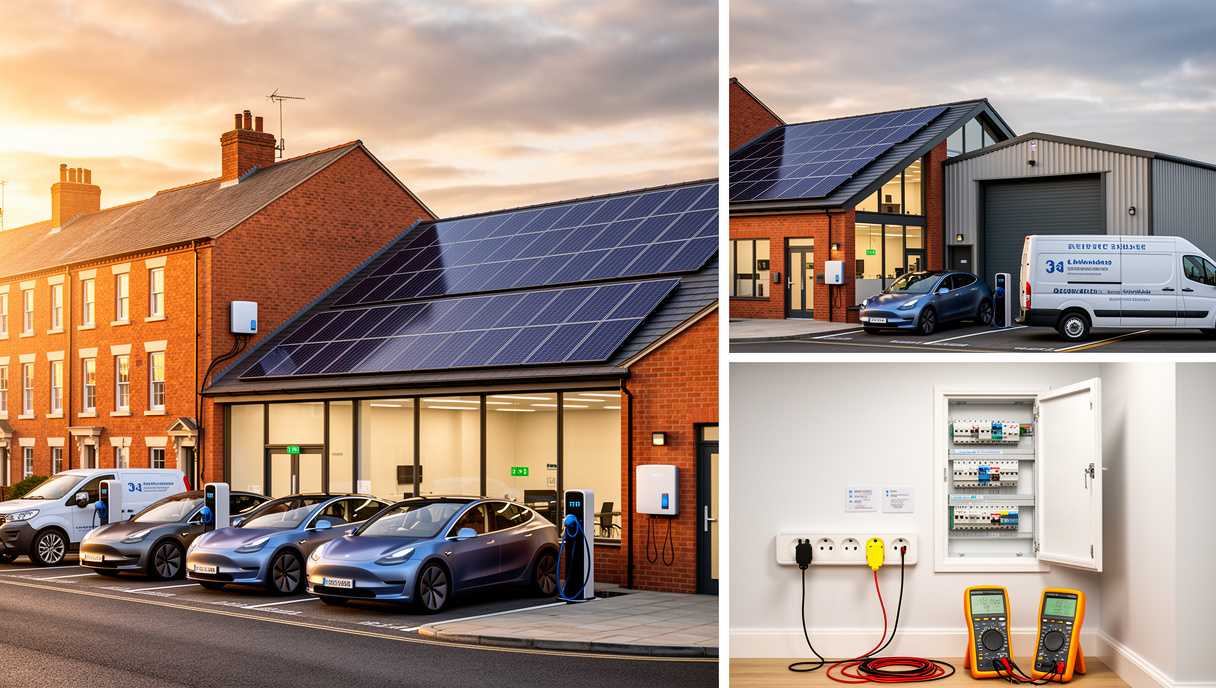
How a Professionally Designed System Works: Sizing, Technology Options, and Safety
Design starts with understanding your energy profile: when you use power, how much solar you generate (if any), and what your goals are—bill reduction, backup capability, or both. For most Bedford homes, a 5–12 kWh battery is typical; for businesses on three-phase supplies or with higher loads, 10–40 kWh (and beyond) may be appropriate. The aim is to cover evening and early-morning demand without oversizing. A detailed survey looks at meter type, supply phase, available installation space, ventilation, and communications connectivity for app control and tariff automation.
Batteries come in two main system architectures. AC-coupled batteries connect to your existing consumer unit via a dedicated inverter/charger. They’re ideal for retrofits, particularly if you already have solar. DC-coupled batteries connect on the solar side through a hybrid inverter, which can be slightly more efficient for new PV-plus-storage installations. Both options can deliver excellent results; the right choice depends on your property, planned upgrades, and whether backup power is required. For backup, a carefully designed “essential circuits” arrangement ensures critical loads stay on during outages, isolating them safely from the grid.
On UK compliance, installations must follow current wiring regulations (BS 7671) and manufacturer guidelines. If your system can export, it will typically fall under G98 (up to 3.68 kW per phase) for “fit and notify,” or G99 for larger capacities requiring prior approval. In Bedford’s area, the Distribution Network Operator is UK Power Networks, so export settings, protection, and commissioning documents must align with their requirements. Where needed, export-limitation devices are used to stay within agreed thresholds while still taking advantage of onsite generation and storage.
Safety and longevity are central to reliable operation. Modern lithium battery chemistries, commonly lithium iron phosphate (LFP), provide robust cycle life and stable performance. Best practices include selecting an appropriate indoor location—like a utility room, garage, or dedicated plant area—ensuring clearances, mounting to solid substrates, and providing adequate ventilation in line with the manufacturer’s guidelines. Fire safety is supported by suitable enclosure placement, cable management, and protective devices. Systems are commissioned with thorough testing, and owners receive clear handover documentation, including app setup for monitoring, alerts, and software updates.
Finally, smart control makes the difference between good and great performance. Current transformers (CT clamps) measure import/export in real time, allowing dynamic charging and discharging. Integrated apps and portals let you tweak schedules, adapt to changing tariffs, and monitor savings. Over time, a well-tuned system learns your habits—pre-charging before known peaks, holding reserve for EV or heat-pump use, and ensuring there’s headroom to absorb midday solar when the sun appears over Bedford’s often-changeable skies.
Local Scenarios and Results Across Bedford: Case Studies, Costs, and Next Steps
Real-world results across Bedford show how different properties unlock value in different ways. A semi-detached home in Kempston with 4 kW of solar and a 9.5 kWh battery now covers most of its evening use from stored solar in summer and from cheap off-peak rates in winter, raising annual self-consumption to over 70%. The homeowner opted for an essential-circuits backup, so the fridge-freezer, home office sockets, and lighting stay on during outages—delivering practical resilience without the cost of whole-house backup.
At Priory Business Park, a small office with a three-phase supply installed a 20 kWh battery to trim late-morning and mid-afternoon demand peaks. By intelligently charging during shoulder periods and discharging across peak half-hours, the business reduced not only unit costs but also peak-related charges. Around Elstow and Wootton, families combining EVs with storage use off-peak charging windows to fill both car and battery, spreading low-cost power across the next day’s cooking, laundry, and entertainment. Add a heat pump into the mix and batteries become even more valuable—pre-charging ahead of cold evenings to ease the load when everyone gets home.
Indicative costs depend on size, brand, and site conditions. As a broad guide, retrofitting a quality 5–10 kWh AC-coupled system often falls in the mid-thousands, while larger home or light-commercial systems can range higher depending on capacity and backup requirements. New solar-plus-battery packages are typically more cost-effective than separate retrofits because the inverter and installation work are consolidated. Over a typical 10-year warranty period (and often longer in practice), savings accrue from bill reductions, better utilisation of solar, and optimised use of time-of-use tariffs. Many Bedford customers find a sweet spot where comfort and convenience rise while monthly costs fall.
Planning considerations are usually straightforward. Indoor installations are the norm; for outdoor or garage placements, weatherproofing and temperature management must follow manufacturer specs. Most domestic systems don’t require planning permission, but listed buildings or conservation areas—such as parts of Biddenham—may need additional checks. A pre-install survey confirms cable routes, consumer unit capacity, and whether upgrades are sensible for safety and future readiness. After commissioning, owners receive system documentation and guidance on fine-tuning settings for seasons, SEG export, and any EV/heat-pump schedules.
For households in Brickhill and Putnoe aiming to capture more of their solar, for growing families in Great Denham balancing EV charging with evening use, and for shops in the town centre that want fewer interruptions and steadier bills, the path is clear: match the system to your goals, size it to your real demand, and prioritise quality installation. A trusted local provider who understands Bedford’s housing stock, business patterns, and DNO processes can make the difference between “installed” and “optimised.” To explore options tailored to your property and usage—whether retrofit or part of a solar upgrade—see Battery Storage in Bedford and discover how a smarter setup can work day and night for you.

Granada flamenco dancer turned AI policy fellow in Singapore. Rosa tackles federated-learning frameworks, Peranakan cuisine guides, and flamenco biomechanics. She keeps castanets beside her mechanical keyboard for impromptu rhythm breaks.